

Rollover truck crashes in California are some of the most serious types of roadway accidents. Involving injuries to both passengers and pedestrians, multi-vehicle collisions, and severe property damage, rollovers can be truly catastrophic and even fatal. Large, heavy trucks with a high center of gravity are prone to tipping and rolling over suddenly, often when drivers are speeding, fatigued, or otherwise negligent.
Given the possible consequences of rollover truck accidents, it is important to know why they happen, who can be held legally responsible, and what victims can do under California law.
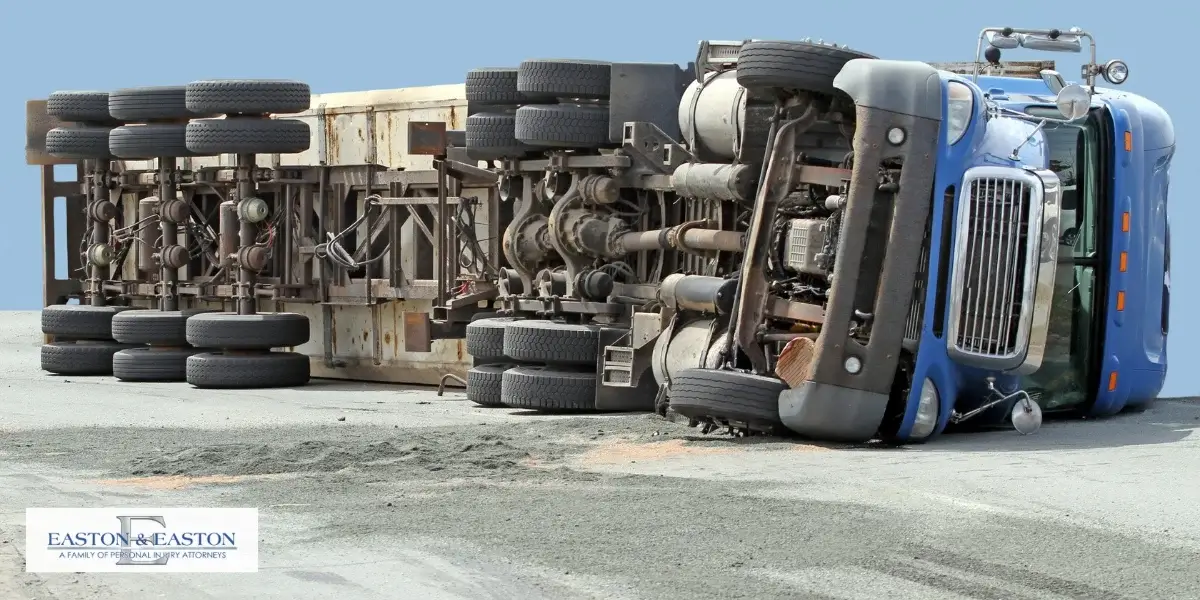
Why Are Truck Rollovers So Dangerous?
Trucks are far heavier than cars and often carry heavy or unevenly distributed loads. The energy released in a rollover crash can crush smaller vehicles and block multiple lanes of traffic or highways, leading to secondary collisions. Many victims suffer catastrophic injuries such as traumatic brain injury, spinal cord damage, internal organ damage, and permanent disability.
Survivors typically need months or years of medical care and financial assistance beyond an insurance company’s quick payout.
Rollover truck crashes in California are prevalent throughout major freight transportation corridors like Interstate 5, Interstate 10, and State Route 91. These locations have heavy commercial traffic, higher speed limits, and sudden lane changes, which can lead to catastrophic rollovers.
Rollover truck crash victims are often taken to the following hospitals for emergency treatment: UC Irvine Medical Center, 101 The City Drive South, in Orange, or Los Angeles County USC Medical Center, 2051 Marengo Street, in Los Angeles.
California Superior Courts, such as the Orange County Superior Court, 700 Civic Center Drive West, in Santa Ana, or the Stanley Mosk Courthouse, 111 North Hill Street, in Los Angeles, often hear civil injury claims arising out of rollover truck crashes. Knowing where and how these cases proceed locally is essential to holding parties accountable after a rollover truck accident.
Common Causes of Rollover Truck Crashes in California
Truck rollovers are almost never accidents in the traditional sense. Most rollover crashes are preventable and involve a failure to follow safety laws and practices. Some of the most common causes include:
- Speeding and unsafe turns. Traveling at high speeds on curves, freeway ramps, or downgrades is one of the most common causes of rollover crashes. Trucks need longer to slow down and take more distance to turn. However, too-fast turns can make a trailer tip over or jackknife.
- Improperly loaded cargo. Improperly loaded or overloaded cargo can increase rollover risks many times. In addition, shifting cargo inside the trailer can destabilize a truck in the middle of a turn or during hard braking.
- Driver fatigue. Driving long hours on the road can impact reaction time and judgment. Tired drivers may fall asleep at the wheel or wander out of lanes, which can cause a rollover. Driver fatigue is one of the top causes of rollover truck crashes.
- Mechanical issues. Mechanical failures can also lead to a rollover crash. Brake failure, tire blowouts, steering malfunctions, or suspension issues can all cause rollovers. Inadequate or infrequent inspection or maintenance by a truck company may lead to crashes.
- Road conditions. Roadway conditions can lead to a rollover. Bad road design, uneven pavement, construction zones, and debris are some factors that may cause rollovers. A government entity can be held liable in the rare instance where a roadway design or condition was a primary factor.
There were 114,000 (23%) injuries and 5,279 (1%) fatalities in the roughly 503,000 large truck crashes that were reported to the police in 2022.
Relevant California Truck Accident Laws
California is a comparative negligence state. This legal principle means that victims may recover some damages even if they share partial fault for their accident. Compensation, however, will be reduced in proportion to the degree of victim fault.
California law also provides that victims have two years from the date of the rollover crash to file a claim. The purpose of this statute of limitations is to allow parties to seek legal remedies in a timely manner and to prevent evidence from being lost or destroyed.
Federal and state trucking laws and regulations are also highly relevant to proving liability in rollover accidents. Examples of relevant statutes and rules of the road include those on hours of service and driver logs, vehicle and cargo inspections, cargo securement, and truck maintenance and equipment standards.
Hire a Truck Accident Lawyer
To protect their rights, accident victims should also think about how to hire a truck accident lawyer as soon as possible after an accident. While victims are recovering and meeting with doctors, trucking companies and insurers are already working to build their defense.
Insurance companies and trucking companies typically try to pay as little as possible or deny truck accident claims altogether and place blame on accident victims. Representation by a skilled truck accident attorney will give you the greatest chance of securing fair compensation. Hire a truck accident lawyer with Easton & Easton today.
FAQs
How Does a Rollover Crash Happen?
A rollover crash is when the center of gravity of a vehicle abruptly shifts, and it falls onto its side or roof. Common causes are taking sharp turns at high speeds, sudden swerving, and running off the road and hitting a curb, soft shoulder, or median. Improper loading and increased vehicle weight can also raise the risk of rollovers for trucks and SUVs.
What Happens to Your Body in a Rollover Accident?
In a rollover accident, occupants may be subjected to rapid, multi-directional movements of the vehicle as it rolls over. Occupants may strike the interior of the vehicle or be tossed around, even if restrained by seat belts. Head and brain injuries, spinal cord injuries, internal organ damage, broken bones, and soft tissue injuries caused by multiple impacts are typical.
What Is the Leading Cause of Rollover Accidents?
The most common cause of rollover crashes is excessive speed and quick steering actions, particularly when taking a curve or entering and exiting freeway ramps. High centers of gravity, uneven weight distribution of cargo, driver fatigue, and tire or brake malfunctions also contribute to rollovers with larger vehicles, such as a truck or SUV, when the driver loses control.
What Is the New Accident Law in California?
California accident laws have seen recent changes, focusing on broadening liability, enhancing safety compliance, and strengthening consumer rights in personal injury cases.
Updates include transparency in insurance practices, accountability for commercial carriers, and procedural modifications impacting personal injury and wrongful death claims. These changes aim to facilitate better access to compensation for victims while reinforcing roadway safety standards.
About Easton & Easton
Easton & Easton’s trial lawyers have secured over $100 million for injury victims. We are repeatedly named by the legal industry’s top law-firm rating services as a top plaintiff advocacy firm. Easton & Easton have earned a reputation for taking on big defendants and achieving positive results for rollover truck accident victims throughout California. Contact us today for a free consultation.


 ES
ES